Showing posts with label 伊拉克 Iraq. Show all posts

17 May 2014

浩劫后的涅槃重生

一对库尔德(Kurd)叔侄目无表情地向我比手划脚,示意我搭上他们载满铜制品的红色轿车。我们跨越作为土耳其和伊拉克边界的底格里斯(Tigris)河,我搅下车窗拧头观望,崭新的红白绿星旗架在挺拔而立的旗杆上,凛然飘逸,一行显眼的蓝色英文字母被刻写在白色的拱门上,耳目一新,仿佛迫不及待地向每一个入关的人们昭示着一个全新的景象。

欢迎来到伊拉克。
欢迎来到伊拉克
在伊拉克这个仅能令人望而生畏,不太可能令人联想到美好事物的国度,大概没有其他地方如苏莱曼尼亚(Suleimaniyah)的红色博物馆(Amna Suraka Museum)和哈莱卜杰(Halabja)的小镇那样,可以如此深刻地刻划着沙旦胡先时代的狂人政治和蛮横残暴的非人统治,而对于生活在这里的库尔德人,大概没有其他人如沙旦胡先那样可以和自己的民族发展史扯上如此密不可分却又如此欲罢不能的关系,迫使他们没有选择地牢记终生。沙旦胡先这个曾几何时令人闻风丧胆的名字,注定要被历史记上一注,然后安置在斯大林、希特勒、东条英机、波尔布特等声名狼藉的恶人旁,遗臭万年。
坐落在伊拉克北部苏莱曼尼亚的红色博物馆
红色博物馆的前身是伊拉克以沙旦胡先为首的复兴社会党(Ba’ath)的情报机关总部,之所以被称为红色不单是因为其朱红色的外墙,还有当年发生在这里每每让人联想到红色的种种事故。

走入美如其名的所谓政府办公楼,如果不是内部迥然不同的陈设,我大概很难相信它其实就是沙旦胡先下达司()令的指挥中心。既然是情报机关,自然少不了拷问室,有了拷问室,也就自然有囚禁的牢房,有了牢房,自然就让人联想到暗无天日的囚犯,那是黑暗政治的游戏规则,并不局限于当时奉行社会主义的伊拉克。
囚犯被反手吊起以接受拷问
铁栏背后没有可以预知的明天
不收钱的库尔德族导游一边向我叙述他方的历史故事,一边引领我到当年的牢房及拷问室,在他犹如说故事般娓娓道来的讲解中,我下意识发现自己犹如当年的囚犯般被一个不知名的狱吏押领在昏暗的长廊中,数目不多的陈设和展示品纷纷在我一往一回的长廊中呈现在我模糊的视线里,皆在描述和刻画沙旦胡先当年对库尔德人所进行的种种日常迫害,展览馆里也展示着陈旧但不模糊的罪证及“罪照”,我趋前一看,发现其中几张是在哈莱卜杰拍摄的照片,其他的照片则记录着那些死在安法尔运动(Anfal Campaign)下的无辜人士的惨状,看了令人作呕难安,随时咽不下口水。
昏暗的长廊中让人透不过气
在沙旦胡先时代,不计其数的库尔德人在“自由斗士(Peshmerga)”的罪名下被押到这里进行拷问,在昏暗的拷问室内受尽了无尽的拷打、蹂躏、折磨,然后在不知不觉中死去,无日无之的红色恐怖无时无刻无不袭击肉体上的每一个细胞,铁栏背后没有可以预知的明天。这一切难免让人联想到纳粹集中营的情景,仿佛印证了历史循环是必然的周期定律。
无日无之的红色恐怖
我迫不及待地离开随时让人窒息而死的室内,到外头去透透风。后院里停放着一些生锈失修的俄制坦克、装甲车、防空炮车等军事武器,布满弹孔的红色建筑正好成为了这些绿色杀人机器的背景,那是库尔德人以子弹在墙上所留下的历史印记。库尔德人在1991年占领这座总部与指挥中心后,并没有将这个造成民族浩劫不断勾起伤痛回忆的历史伤疤给摧毁,而是决定把它留下来,作为沙旦胡先推行残暴政治的铁证,让它成为自身民族经历的见证,让压迫者自行为受压迫者平反伸冤。

每当我把目光投在这座乍看之下与其他政府办公楼无异的建筑物时,它总是自行地摇身一变成为沙旦胡先独裁政权的照妖镜,然后在我投入这面镜子时迫不及待地诉说着一段又一段令人不寒而栗的死亡故事。

我在坦克车的影子下坐下来,心情无法及时平复,历史重负几乎压垮了不胜负荷的记忆存贮器,我始终无法透过气来,可思绪却又不由自主地回想起昨天在哈莱卜杰所上的另一门历史之课。
投在库尔德人社区的炸弹引爆了滚滚翻腾的浓烟(哈莱卜杰纪念馆资料)
哈莱卜杰是另一个可以窥视沙旦胡先暴行的地方。

根据哈莱卜杰纪念馆的史料,1988316日,就在伊朗和伊拉克战争熄火前夕,哈莱卜杰狭长如带的天空忽然被震耳轰鸣的伊拉克战机划破,平地一声雷的轰炸爆发了滚滚向上翻腾的白色、黑色然后黄色的蘑菇形浓烟,然后在地上形成了无孔不入无所遁形的烟雾。那些吸入据说含有苹果味的烟雾的人,有些如同灵魂在瞬间被抽离般马上暴毙,有些则呼吸骤停、皮肤痉挛,然后笑着死去,其他的不是在几分钟后以不同的姿态死去,就是死在青色的呕吐物旁。在短短的5个小时的袭击里,近5千条生命当场被剥夺,7千至1万人受伤,大部分都是平民百姓,另有千人在灾难后的几年里死于并发症或其他疑难杂症,包括流产、出生缺陷及胎儿畸形。
生命瞬间被抽离(哈莱卜杰纪念馆资料)
一切生命静止(哈莱卜杰纪念馆资料)
那些投在以库尔德人为主的哈莱卜杰平民区,相信是含有芥子气(Mustard)、沙林气(Sarin)、塔崩(Tabun)氰化(Hydrogen Cyanide)VX毒气等杀人于无形的炸弹,后来被证实是人类史上最大宗以平民区为目标的化学武器袭击,并在201031日被伊拉克最高法院宣判为针对库尔德人的有计划性的种族灭绝(Genocide)
哈莱卜杰乍看之下犹如一个无法发展起来的受伤小镇
哈莱卜杰不见得格外的静谧与安详,但涅槃重生的感觉并不强烈,午后的微风在不见得喧哗的街道上卷起了滚滚的沙尘,在沙尘不断迁徙着陆前再次吹扬,丝毫不让沙尘有落地的机会,仿佛昭示着一个乌烟瘴气无法发展起来的受伤小镇,镇上的发展脚步依然以小镇的格局进行中,很多的建筑物尤其是民宅,依然保持简陋,镇上只有一座隐藏在马路旁的纪念碑和一座新颖的纪念馆不动声色地凭吊着25年前绝非偶然的悲剧,默默叮嘱着偶尔路过拧头仰望的过客别再允许历史自行抄袭过往的篇章。
新颖的哈莱卜杰纪念馆

哈莱卜杰纪念馆记录了成千上万名在1988年化武袭击下丧生的牺牲者名字
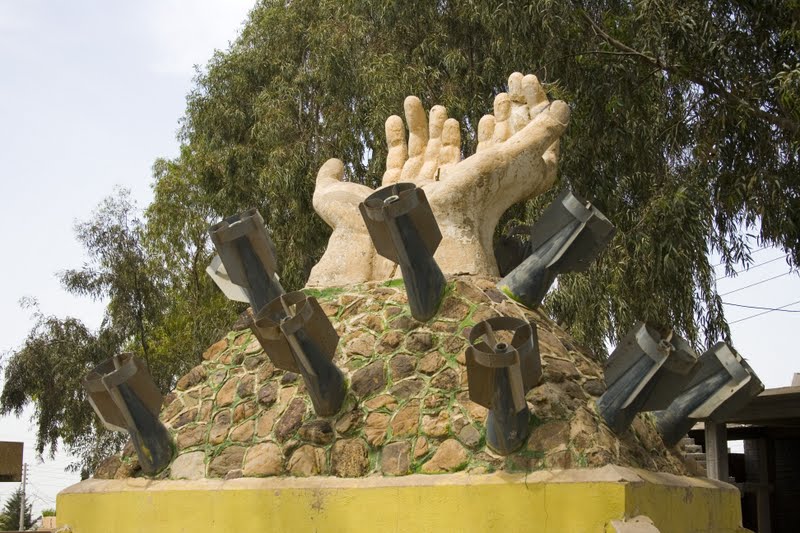
隐藏在哈莱卜杰马路旁的纪念碑
海报上呼吁热心人士为哈莱卜杰化武袭击受害者筹办护理与复原中心
环顾历史放眼世界,从纳粹对犹太人的种族大屠杀、日本蝗军对中国人的大屠杀、柬埔寨红色高棉对自己人的大屠杀、卢旺达胡图族对图西族的种族大清洗到目前正在上演的叙利亚内战以及以色列和巴勒斯坦的武装冲突,人类在历史上似乎一直纵容自己犯下昨天的罪行,在历史重演的灰影下继续重蹈覆辙,让历史没有更新的余地,从波兰的奥斯威辛(Auschwitz)集中营、中国的南京大屠杀纪念馆、柬埔寨的红高棉瓊邑(Choeung Ek)杀人场、卢旺达尼亚马塔(Ntarama)大屠杀纪念到目前正苦守和平路后等待成立的以巴纪念馆,多少的博物馆,多少的纪念碑,多少的坟场墓地等各式各样在灾难后被竖立起来的地点和场所,都以活生生的铁证聚集起人类在那个人性坠入最低点的时代对同类所犯下的种种罪行及难以愈合的历史伤痛,为人类记录了一篇又一篇无法磨灭的历史印记,书写着一章又一章无法倒带的历史过程。可惜,灾难后的反思虽然有警惕性、醒觉性及教育性的效果,却始终难逃无奈与苍白的感叹。
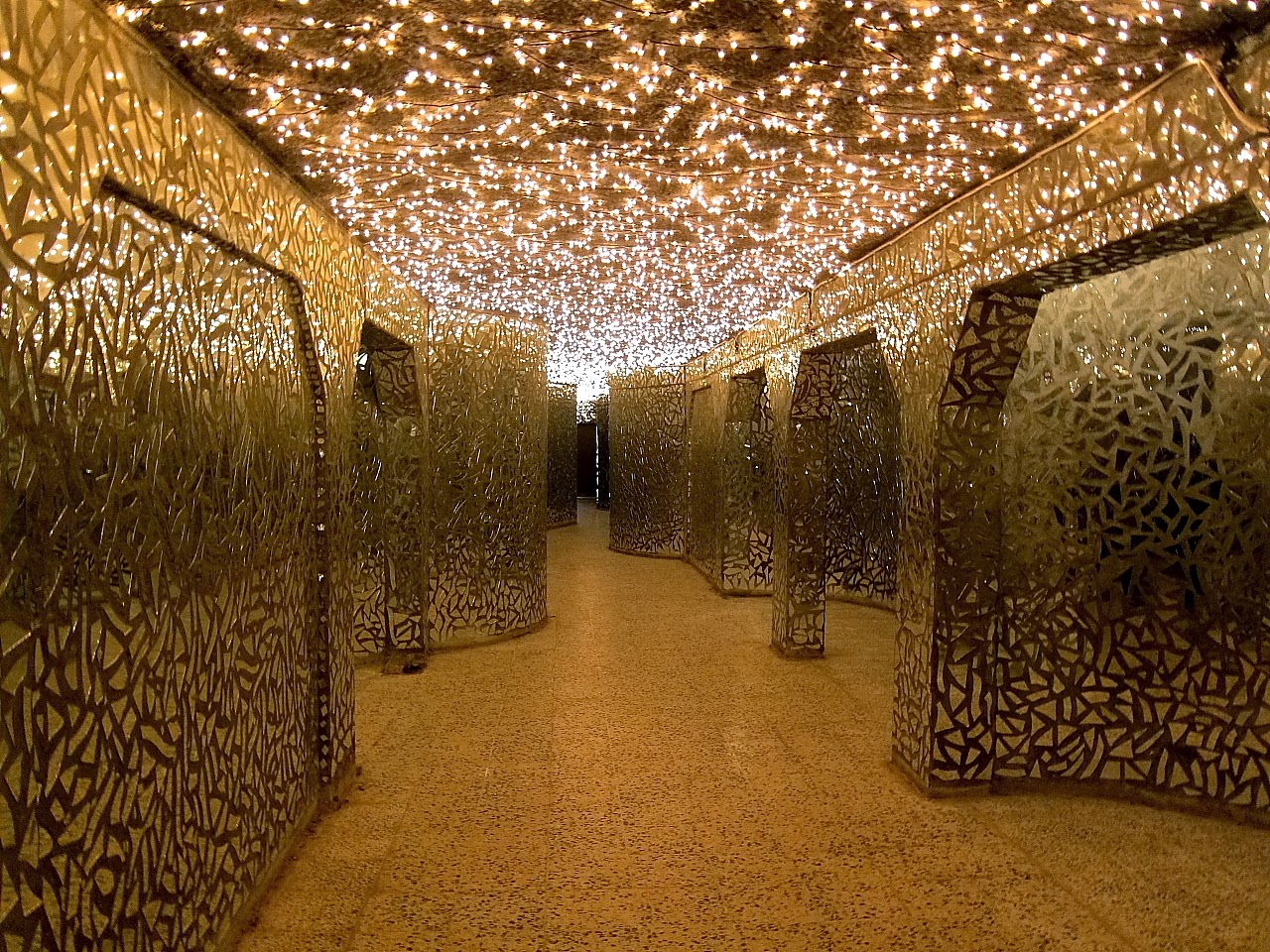
镜子之廊
我托起沉重的身子回到红色博物馆内,誓要完成这趟把真相公诸于世的历史之旅,旅程的最后是一条灯火通明泛着亮光的“镜子之廊”,墙身据说由182,000片玻璃碎片组成,代表着182,000个死于沙旦胡先暴行的库尔德人,天花板上另有5,000个贡献光源的小灯,代表着5,000个被沙旦胡先摧毁的库尔德村落,那是整个历史巡回中最可以让人透气的地方,如此的写照也最能为一个在痛苦的边缘苟延残喘的民族带来希望的曙光而伊拉克库尔德族自治区在沙旦胡先倒下后得以形成及逐渐为人所知晓,或许就印证了库尔德族人在经历浩劫后所迎来的涅槃重

12 May 2011

Traveling Independently in Iraq(Kurdistan), May’2011

First of all, don’t simply believe everything you read, be it in the internet travel forum or travel guidebook.

Getting There and Away (By Land)

The only border crossings available for foreigners are Turkey and Iran.

Turkey: You enter Iraq through its northwestern corner –  the Ibrahim Khalil border post at Habur. The nearest town is Silopi, which is 15 km from the border post. You can take a series of dolmus from bigger cities in Turkey to the springboard of Silopi. The sample fare of dolmus is Midyat-Idin-Cizre-Silopi-Habur = YTL 7, 4, 4, 5. Ignore the taxi drivers in Silopi as they charge an unacceptable YTL 20 for a mere 15 km drive and claim that that is the only way to get there. Some idiots even paid $50 for it! Hitchhiking is possible from Silopi but bear in mind that if you get a ride from a truck driver, you will have to walk to the border from distant away as there is usually a long queue of trucks before the border. You are likely allowed to walk to the Turkish stamping booth(if not, just insist on it or hitchhike from the gate) and once you are stamped exit in Turkish side of border, you will have to hitchhike a random vehicle for a merely 500m crossing over the Tigris River to get you to the Iraqi Kurdistan side of border as walking on foot is ludicrously prohibited. You will be granted a 10-day standard visit visa on arrival which is free and extendable after you answer some standard questions. It is pretty straightforward and it usually takes less than half an hour. There are usually some taxis waiting outside the border which you can take to travel to the nearest town of Zakho or further to Dohuk. It is also possible to hitchhike by asking someone in the immigration building while waiting for your visa. If you are leaving Iraqi Kurdistan to Turkey through Ibrahim Khalil border post, bear in mind that you will likely have to wait for a ridiculous 6-hour just to pass through the Turkish side of border as rumors have it that the Turkish custom officers are making this on purpose and it is not uncommon for them to go for a tea break in the middle of hectic long queues. There are also some small scale of smugglings especially cigarette from Iraqi Kurdistan to Turkey. 

Iran: You enter Iraq through its northeastern corner –  Haji Omaran border post. The nearest town is Piranshahr which is about 20 km away. You can travel to Piranshahr by taking a bus from Orumiyeh(pronounce Urmia in Kurdish). Once you are in the Iranian side, you can take a shared taxi to Erbil(IQD 22,000; 2.5 hrs) through Hamilton Road which is very scenic and yet very unfriendly due to the unexploded land mines left behind during the 8-year Iran-Iraq War. If you are leaving Iraqi Kurdistan to Iran, apparently there is a bus($30, 7-8 hrs) departing from Erbil to the border but I failed to locate the bus company. Even I hate taxis, it gave me no reason not to take it in this case as it’s far cheaper and faster. Once you crossed over Haji Omaran border to the Iranian side, just wait with locals right after the border as they will be buses passing through which will bring you either to Piranshahr or Orumiyeh for FREE. But bear in mind, do it as low profile as possible especially to get away from the taxi drivers. One of the drivers threatened me to report to the traffic police as I was not in the passenger’s list. Change your money here as the money changers here are more honest and they usually offer better rate than those in Iraqi Kurdistan side of border.

It’s not possible to cross from Syria to Iraqi Kurdistan or vice versa unless you have an Iraqi visa, which is not likely to issue to independent travelers. The Rabiya border remains as ‘local-only’ crossings.

Transportation

You can’t really get around in Iraqi Kurdistan without taking a shared taxi. But this doesn’t mean that you should only rely on shared taxi. Apparently there are lots of cheaper buses but you need some efforts to figure out.

Shared taxi from Zakho to Dohuk(IQD 5,000; 1 hr) leaves when it is full. It is not necessary to hop on a taxi to get yourself to the garage. It is relatively easy to reach on foot(10-30 minutes) from the town of Zakho. Just ask around for ‘Dohuk Garage’. Keep in mind that this garage is just a parking compound with a hut.

Shared taxi from Dohuk to Amediya(IQD 7,000; 1 hr) leaves when it is full. The garage is near the Stadium but is distant away from the town. If you hate taxi like I do, just ask around in the town and by luck you will get a lift by a private taxi. You should pay him the same amount of money and ignore for any overcharge. As for return, shared taxi leaves from either Amediya(the first round about in the town) or Sulav(an hour downhill walk from Amediya)( just ask and wait at any souvenir shop or restaurant) to Dohuk and both should cost the same price.

Shared taxi from Dohuk to Suleymaniyah(IQD 35,000; 5-6 hr) leave either from the taxi office near the souq or you can ask them to pick you up in your hotel. If you prefer to break the journey, there is a shared taxi from Dohuk to Akre(IQD 8,000-10,000, 1 hr); from Akre to Raniya(IQD 12,000-15,000; 2.5 hrs); and from Raniya to Suleymaniyah(IQD 8,000; 1.5 hrs). From Raniya, it is possible to go to Choman (IQD 5,000; 1 hr) by shared taxi. There are lots of hiking opportunity but beware of land mines. Seek local advice before attempting any hike. You can also take a shared taxi from Dohuk to Erbil(IQD 15,000; 2 hrs) and from Erbil to Suleymaniyah(IQD 10,000; 2 hrs). News from other travelers said that there are cheaper buses from Dohuk to Erbil. However, the buses from Dohuk to Erbil might go into the city of Mosul, which is under Arab Iraq, before making its way to Erbil.

Minibus from Suleymaniyah to Halabja(IQD 3,000; 2.5 hrs) leaves from the garage located outside the town centre. It’s a 15-minute walk from the busiest souq in the town centre or you can take a bus(IQD 400) from the town centre there. Just go to a garage nearby and ask for ‘Halabja Garage’.  Shared minivan from Suleymaniyah to Erbil(IQD 10,000; 2 hrs) leaves from another garage miles away from the town centre and you should take a bus(IQD 400) there. The main highway between Erbil and Suleymaniyah goes into Arab Iraq. While buses might go into the city of Kirkuk, which is under Arab Iraq, before making its way to Erbil, shared taxis usually will make the trip through the outskirt of Kirkuk (If you are in a shared taxi, don’t fall asleep as you can have a glimpse from the car’s window on the grey city of Kirkuk which is totally different with all the cities to the north).

People have been telling me that Mosul and Kirkuk are the most dangerous city in Iraq. There have been some attacks and kidnapping there but I wasn’t able to further testify it as with my Iraqi Kurdistan visa, I’m not allowed to travel further south. But even if you happen to be in Arab Iraq, don’t panic and just remain calm. The driver will help you to get through of it after you answer some questions as there isn’t any clear border line between Arab Iraq and Iraq Kurdistan. Bear in mind that it’s illegal to travel to Arab Iraq with an Iraqi Kurdistan visa unless you have an Iraqi visa which is currently unlikely to issue to independent travelers considering the current situation in the country. 

Shared taxi from Erbil to Haji Omaran border(IQD 22,000; 3 hrs) leaves when it is full from a small garage which will take you 20 minutes to reach on foot from the citadel.

Accommodation

News from other travelers have been telling that it is literally easy to get invited by locals to stay overnight in their houses. I was lucky to be invited for a walk, a chat(and a photo session?) but regrettably I was never lucky enough to be invited for a home stay.

Dohuk: Kordo Hotel (Twin bed private ensuite; IQD 15,000).
- This was the most luxurious place I have ever stayed as far as my trip goes, with satellite TV, fridge, cupboard, couch, clean bathroom and big twin bed. All are more than enough for me. Now I understand what value is for money. The 18-year old Wisam speaks English. Bargaining is necessary.
Hotel Kordo
Suleymaniyah: Brayan Hotel (Twin Bed Room; IQD 15,000).
- This is also a very comfortable and well-equipped room. Again, all are more than enough for me. Bargaining was necessary.
Brayan Hotel
Erbil: Sarsung Hotel (Twin Bed Room, IQD 12,000)
-This was the cheapest one I can find near the Citadel and it was gloomy and tatty and the share bathroom and toilets were disgusting. I stayed in a windowless room but luckily the weather wasn’t too warm. Only locals stay here. Bargaining was not necessary as the owner knows it was the cheapest place in town. The owner speaks no English.
Sarsung Hotel
Note: I was wrong. Lebanon isn’t the most expensive country in the Middle East. It’s Iraq. RM 1 ≈ 375 IQD

11 May 2011

Taking the Hamilton Road

I was in Rayat – the last town in Iraq before crossing the border to Iran at Haji Omaran border post. The driver stopped his car in front of a mosque and went for prayers. It was a cloudy day. I went out and the surrounding mountainous view stunned me right away. I took out my camera and started killing my shutter. An army spotted me in just a second and ‘invited’ me to his office where I was directed to his superior wearing in plain cloth.

As usual, they took my passport.

In exchange, I was served with tea and curiosity(if not suspicion).
Scenic yet unfriendly mountainous region, known as Hamilton Road 
The officer told me that there are landmines all over the mountain which were left behind during the Iran-Iraq War almost 30 years ago. While Hamilton Road remains as one of the most scenic and wonderful high road in Iraq, I told the officer that I’m just wandering on the street. I’m not going for any hike. I have interest but have no time.

The rest of the day seeing me struggling at both sides of the border, explaining to those stupid custom officers and border polices that as a Malaysian, I don’t need a visa to get in Iran. Aighhh…

Leaving Iraq also means saying goodbye to the arduous Arabic. No Arabic anymore!

Next challenge – Turkish and Farsi.

Note: Oh ya! The only cheap stuff in Iraq is the cigarette. So I bought as many packet of cigarette as possible in Iraq to bring over to Iran and Turkey, pretending to be one of those smugglers. Praise me smart, please!

10 May 2011

Things Changed

What is the first thing come to your mind when you hear about Iraq? Saddam Hussein? Baghdad? Iran-Iraq War? Iraq-Kuwait War? Suicide bombing targeting on Shiite pilgrims in Karbala? 2003 US-led invasion?  Turtle Can Fly? Yes, it is all about war. No any country on earth has dominated international headlines as extensive as Iraq, but sadly it was all about the unkindly events. In my personal ranking, Iraq is only second after Afghanistan as the most dangerous places in the world.
No gun into the park!
I was born in a generation which knows nothing about war. Neither do I know the concept of peace which has always been thought to have granted without the necessity to work for it.
Anything you want to say about both of these photos?
Despite of being one of the most dangerous places on earth, Iraq was the cradle of Mesopotamian civilization where the Assyrians, Sumerians and Babylonians once set their foot on. While the southern region of Iraq(Arab-controlled Iraq) remains off-limit for travelers , it is absolutely safe to travel around in the northern region(Kurdish Region). Iraqi Kurdistan is not a little-visited region anymore especially upon the incorporation of an Iraqi Kurdistan section in the latest Lonely Planet Middle East Travel Guidebook. However, it is regret to know that while most of people tend to take BBC or CNN as the only source of information, others still tend to take some news they saw in the past as a whole and never realize things have changed.

09 May 2011

Touristic Erbil

The bus stopped in the suburb of the city centre. It took me one hour of walking before the citadel was visible. I began not to feel the weight of my backpack. I wasn’t sure if my backpack was getting lighter or I’m getting stronger(Shit! I’m actually getting thinner).

I still can’t make up my mind as how many days do I want to stay in Erbil(Kurdish: Hawler), the headquarter of the Kurdish Region Autonomous, or better known as the capital of Iraqi Kurdistan.

Abdullah invited me for a coffee in Shar Park, a fountain park very popular with locals and tourists. Having sick of coffee, I drank milk. Wore in a T-shirt and jean which looked no different with those hip-hop youngsters on the street, Abdullah told me he is a mufti. Upon leaving, he kissed my cheek.
The mufti and I
Shar Park
By the way, I(how about you?) never expect Erbil will be so touristic. No, no, no...I never expect Iraqi Kurdistan will be so touristic…in Zakho, Dohuk, Amediya, Suleymaniyah, etc, almost all the cities I have been were full of hotels and tourists. Oh, ya! Did I tell you that the Citadel in Erbil is the one drawing me to come to Iraqi Kurdistan? It was actually an aerial photo with the rising citadel sits in the middle of the entire city. Initially, I thought that it would just remain as a dream to come here but hey, here I am!
This is it! The Citadel of Erbil
You know what? I have been dreaming a lot since I’m on the road. When I wake up this morning, I thought I have returned to Yemen. Having traveled in Iraq Kurdistan for a couple of days where you were the only stranger on the street speaking no language other than Ingreezi(English), I found myself getting lost in this city, mentally. Perhaps it is because there is not much thing to see and do here other than wandering in the labyrinth of numerous alleys which make up a place called market, and I still can’t understand why there are so many tourists here.

08 May 2011

Suleymaniyah

I like Suleymaniyah.
Kaso Mall
Not because of its Chinese community. Yaya…around 80% of the outlets in Kaso Mall were owned by Chinese and I can only see some Kurdish salesman in some of the outlets. Furthermore, Chinese restaurants were scattered in the city. But this is not the thing.

So, what’s the thing?

Well, maybe it is because of its markets, its busyness, its relatively organized streets, its relatively ease to buy cheap and fresh breads, its……
Suleymaniyah's busy market
Suleymaniyah's busy square
Hey! You don’t really need a good reason to like something, do you?

So, let me like Suleymaniyah.
Amna Suraka Museum(Red Intelligence Museum) was once the headquarter of Ba'ath Regime
Bullet holes are everywhere on the building

Kurdish Genocide

In responding to the Kurdish guerrilla groups in northern Iraq, the then President Saddam Hussein made a test of its chemical weapons on local Kurdish people on 16 March 1988, right before the end of Iran-Iraq War, by releasing multiple chemical agents including mustard gas, the nerve agents Sarin and tabun which directed to the civilian-populated residential area in here, the town where I’m standing now – Halabja. 5000 people have been found dead in a number of ways – ‘just dropped head’, died of laughing, dying in a few minutes after coughing up green vomit, etc. 7000 to 10,000 people injured and thousands more died of complications, diseases and birth defects at the post-genocide period.

Despite its darkest moment, Halabja is now a little dusty town with rows of workshop, grocery shop and restaurant as well as markets. I really couldn’t tell when a local asked me what I think about Halabja.
Halabja town
While it took me a bit of efforts to locate the Genocide Museum & Peace Monument, the photos in the museum appeared to be disturbing. It reminded me of the genocide in Nanjing, China carried out by the Japanese during the World War II though the scale of the latter is incomparable.  
Genocide Museum & Peace Monument

06 May 2011

Dream City

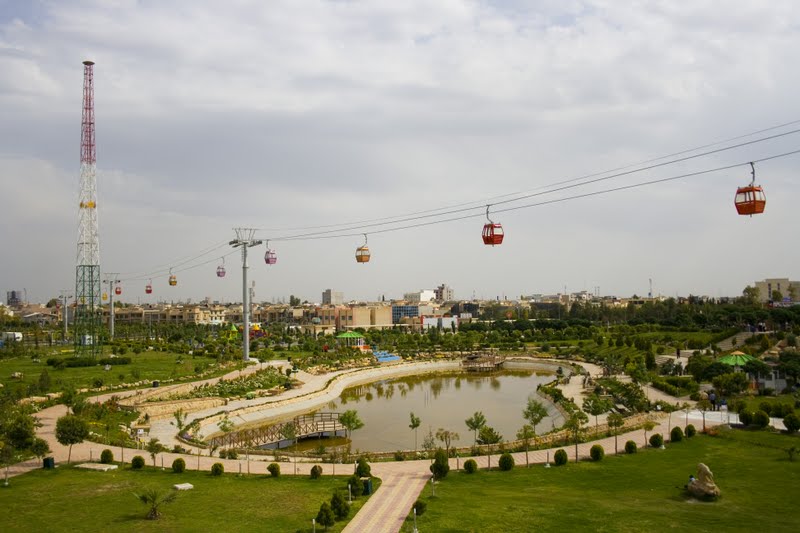
So I was in the Dream City in Dohuk. Wisam, a young Yezidi who works in the hotel I stayed brought me here. Hmmm…a dream city in Iraq, pretty ironic, huh? No! It’s not! It’s all because of my naivety and ignorance.

‘Don’t make a big fuss, you of little knowledge.’ I told myself.

Dream City is actually an amusement park and the Dream City in Dohuk is by far the newest and most popular in Iraq where it also draws lots of people from the South especially Baghdad.

Ok! Ok! I admitted that I will never believe there are wheel Ferris, roller coaster, water park, dodgem, etc in Iraq until I see them with my own eyes.
Dream City of Duhok
What else are missing?
So, I believe now.

While tonnes of food and products are imported from the neighboring relatively flourished countries such as Turkey, Syria and Iran as well as China, the country seems getting on its feet. In fact, there is a saying that the Iraqi Kurdistan is far well-organized, managed and developed than the rest region of Iraq. You can even see street cleaners in uniform cleaning the street and traffic polices giving penalty to those who don’t abide the traffic law.

While it is still too early to comment, let alone to judge, I can’t bury my thought as I think I see their future rising on the horizon, slowly yet vividly.

Well, what I can say. This is traveling, to see the world and learn the world by your own self, not through a picture box or a monotonous screen.